
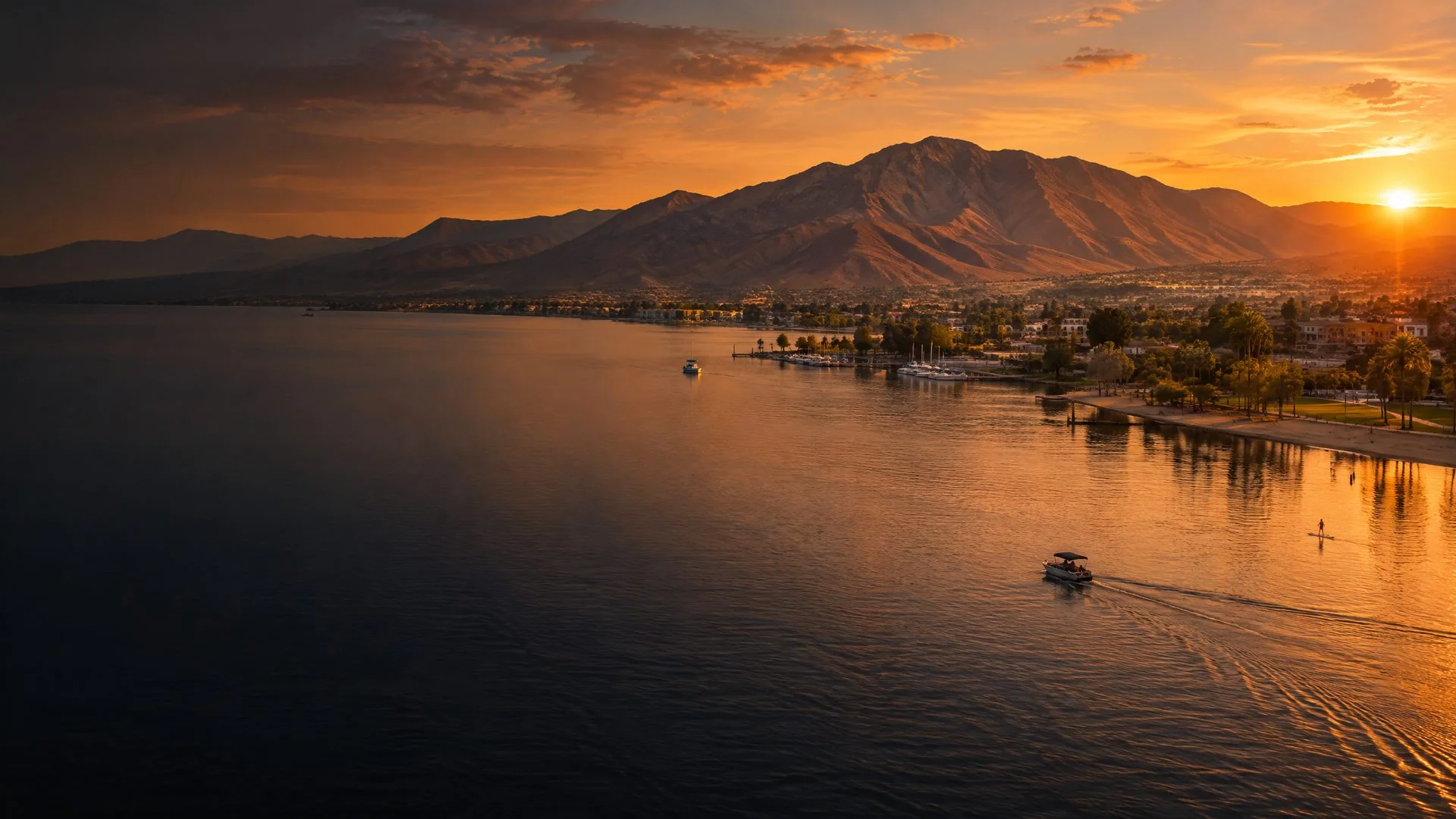
Lake Elsinore is a good example of a town full of these businesses. The City of Lake Elsinore describes the lake as the largest natural freshwater lake in Southern California, with about 3,000 surface acres and more than 14 miles of shoreline used for boating, fishing, jet skiing, water skiing, wakeboarding, kayaking, paddleboarding, and swimming. The Lake Elsinore Visitors Bureau also points to the area's thermal winds, which have made it a spot for skydiving, hang-gliding, and other aerial sports. That's a lot of people arriving with plans and questions.
Here's what we'd make sure a tourism business website does well.
Answer "are you open today?" in the first few seconds
Visitors check this first, and outdoor businesses have more reasons to be closed or limited than most: weather, season, wind, water conditions, holidays.
- Put today's hours near the top of the homepage, not buried on a Contact page.
- Show seasonal hours clearly. If you run longer hours in summer and shorter ones in winter, say so with dates.
- Have a simple way to post a same-day notice, like a banner that says "Closed today due to high winds" or "Rentals sold out for Saturday." If updating it takes a developer, it won't get updated.
- Keep your Google Business Profile hours in sync with your website. When they don't match, people trust neither.
Make booking work on a phone
Most visitors are planning from a phone, sometimes from a parking lot. If you take reservations, the booking flow is the most important part of your site.
- Put a "Book Now" or "Reserve" button at the top of every page, and keep it visible on mobile as people scroll.
- Show real availability if your booking system supports it, so people aren't requesting a time that's already gone.
- Keep the steps short. Date, time, party size, contact info, payment. Every extra screen is a chance for someone to give up.
- If you don't take online bookings, make calling easy instead: a tap-to-call phone number and a clear line about when you answer.
Whatever booking tool you use, test it yourself on your own phone every so often. It's the fastest way to find a broken step.
Put prices and what's included on the page
Visitors are comparing a few options and don't want to call just to find out what something costs. You don't need to list every package, but give them enough to decide:
- Starting prices or price ranges for your main rentals, tours, or services.
- What's included, like life jackets, fuel, gear, or instruction.
- What's extra, like deposits, cleaning fees, or launch fees.
- Your cancellation and weather policy, in plain words.
Being upfront here saves you phone calls and avoids surprises at the counter.
Answer the questions visitors actually ask
Tourism businesses get the same questions over and over. A good FAQ section answers them before they turn into calls or bad reviews. Think about what your staff hears every weekend:
- Do I need a license, permit, or experience to rent this?
- What should I bring or wear?
- Are kids or pets allowed? Is there an age or weight limit?
- Where do I park, and where exactly do I meet you?
- What happens if the weather turns?
For lake businesses, it's also smart to link to the official source for lake rules and conditions rather than writing your own version that can go out of date. The City of Lake Elsinore keeps lake recreation information and lake health updates on its website, so pointing visitors there keeps your site accurate.
Help people find you once they arrive
Visitors don't know the area. "We're by the lake" doesn't help much when there are miles of shoreline.
- Embed a Google Map on your Contact or Directions page.
- Describe the arrival in plain steps: which entrance, where to park, what the sign looks like, where to check in.
- Add a photo of your storefront or meeting spot so people know they're in the right place.
- Make sure your map pin on Google is correct. It's worth checking on your own phone.
Use real photos of your real experience
Stock photos of a generic beach don't help anyone pick you. Visitors want to see what they're actually signing up for: your boats, your gear, your view, your staff, your space.
- Use your own photos, ideally taken in good light during your busy season.
- Show a mix: the activity itself, the equipment, and the check-in area.
- Compress images before they go on the site. Big photo files are one of the most common reasons a site loads slowly on a phone, and slow sites lose visitors who are on spotty cell service. We wrote more about that in why website speed matters for small businesses.
Show up for "near me" and "things to do" searches
Many visitors aren't searching for your business name. They're searching for the activity: kayak rentals, fishing, things to do this weekend. A few basics help you show up:
- A page for each main activity or service, with a clear title and a few paragraphs about it, instead of one page listing everything.
- Your town and nearby areas mentioned naturally in your text, so Google knows where you are.
- A complete Google Business Profile with the right category, hours, photos, and a link to your booking page.
- Reviews. Ask happy customers to leave a Google review, and reply to the ones you get.
Our local SEO website checklist walks through the rest of the basics, and how AI search is changing small business websites covers why clear, specific pages matter more now.
Plan for your busy season, not just today
Tourism businesses have peaks. The worst time to find out your website is broken is a holiday weekend.
- Update prices, hours, and photos before your busy season starts, not during it.
- Check that forms and booking emails are actually reaching you.
- Make sure someone on your team knows how to post a closure notice without waiting on anyone.
If your current site is hard to update or doesn't work well on a phone, it might be time for a refresh. Here are some signs your website needs a redesign.
Want help with your tourism business website?
We're Agentive Industries, a small website agency based in Canyon Lake. We build websites for local businesses around Lake Elsinore, Temecula, Murrieta, Menifee, Wildomar, and the rest of southwest Riverside County, including businesses that depend on visitors.
If you'd like a site that shows what's open, takes bookings on a phone, and helps people find you, take a look at our Lake Elsinore web design page, or contact us. You can also call us at (951) 987-3284, Monday through Friday, 9 to 5. We're happy to look at your current site and tell you what we'd change first.
We can make the next step clear.
Tell us what you have now and what you would like to improve. We will reply in plain language.
Talk with Agentive